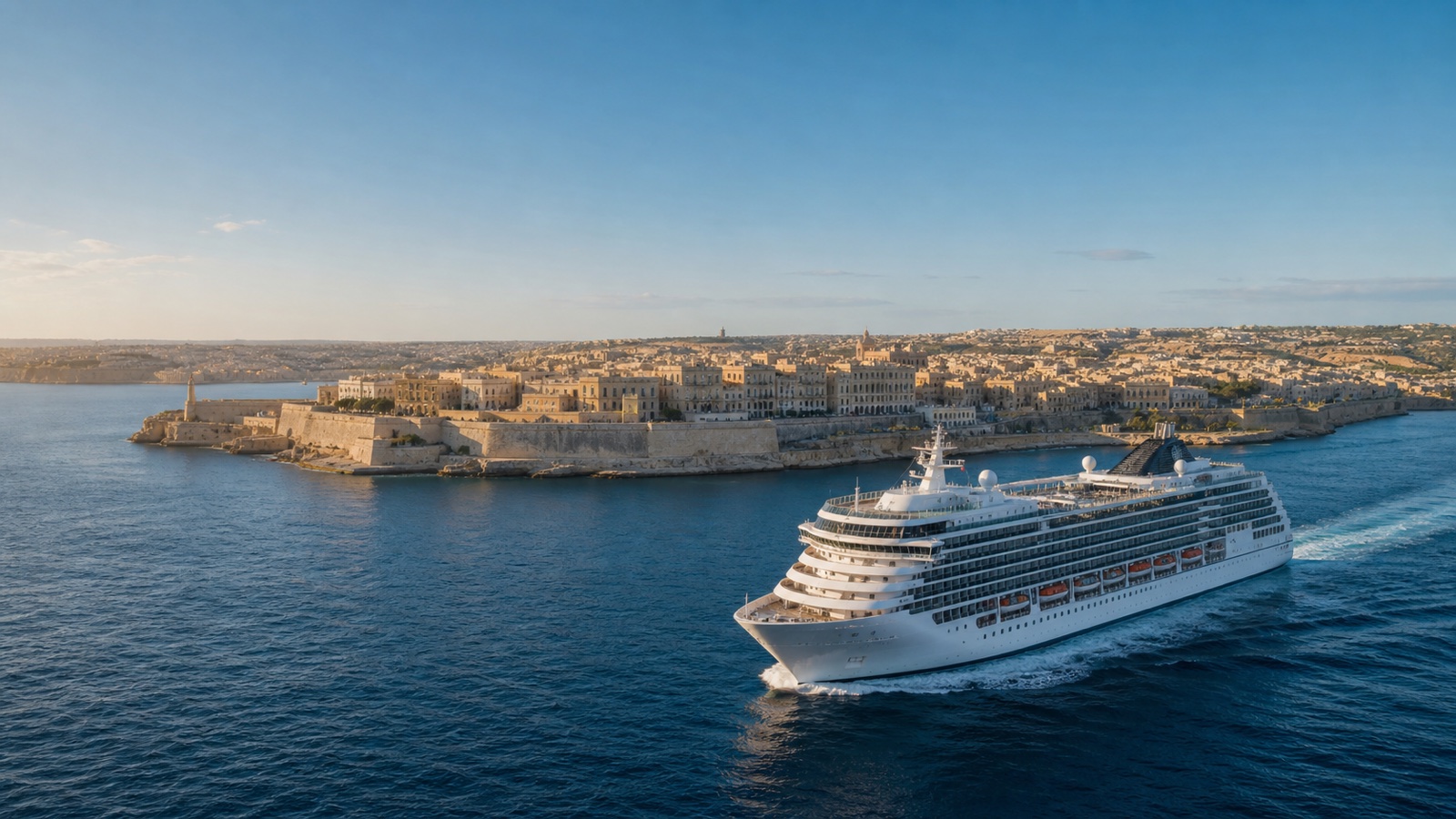
Choose the route family first
“Mediterranean cruise” is not one itinerary. A Western Mediterranean city circuit, a Greek Islands voyage and a Barcelona-to-Rome sailing create different flight plans, transfer demands and days ashore. Compare those structural differences before comparing dining, entertainment or cabin categories.
Western Mediterranean
Spain, France and Italy calls with major art, history and food destinations—often separated from the berth by a meaningful transfer.
- Typical length
- Often 7–14 nights
- Starts / ends
- Barcelona, Civitavecchia or another regional gateway
- Best for
- First trips and iconic European cities
- Main tradeoff
- Port-intensive days and long city transfers
Greek Isles & Aegean
Athens-area departures or broader eastern Mediterranean routes pairing islands with archaeology and coastal scenery.
- Typical length
- Often 7–14 nights
- Starts / ends
- Piraeus, Civitavecchia or another regional gateway
- Best for
- Aegean scenery and ancient sites
- Main tradeoff
- Tendering, heat, steps and congestion
Barcelona to Rome
A one-way pattern that can support meaningful stays in both gateway cities without returning to the original embarkation port.
- Typical length
- Often 7–14 nights
- Starts / ends
- Barcelona and Civitavecchia in either direction
- Best for
- Travelers adding land time at both ends
- Main tradeoff
- Open-jaw flights and two transfer plans
Rome round-trip
A single-gateway pattern that may reach Western Mediterranean ports, the Greek Isles or a mixed itinerary.
- Typical length
- Often 7–14 nights
- Starts / ends
- Civitavecchia round-trip
- Best for
- One international air gateway and a Rome stay
- Main tradeoff
- Civitavecchia is not central Rome
Treat Barcelona, Rome and Athens as part of the trip
Embarkation is more than a terminal name. Barcelona can support a straightforward city-and-port stay. “Rome” sailings use Civitavecchia, so travelers need a separate transfer from central Rome or the airport. Athens sailings commonly use Piraeus. Arrive before embarkation day and build the hotel, airport and terminal sequence into the total trip.
Compare Barcelona and Rome-area gateways before choosing between a round-trip and one-way itinerary.
Measure usable hours—not the number of ports
| Constraint | Why it matters | Check before booking |
|---|---|---|
| City distance | Rome and Florence are not beside their cruise berths. | Transfer time, traffic exposure and return buffer. |
| Tendering | Small-boat transfers can compress the day. | Ship process, mobility and last-tender instructions. |
| Timed entry | Popular museums and archaeological sites may require a reserved slot. | Entry time that still leaves a conservative return plan. |
| Heat and walking | Historic centers can involve sun, stairs and uneven surfaces. | Mobility, shade, hydration and realistic walking distance. |
| Border crossing | A route may include Türkiye or another jurisdiction. | Documents for every traveler and the exact itinerary. |
The most common Mediterranean planning mistake is treating marquee cities as if they sit beside the ship. Rome from Civitavecchia and Florence from Livorno can be worthwhile, but they are transfer-led days. The plan has to survive traffic, rail timing, security lines, attraction entry windows and the final return to port.
Heat and crowd pressure also reduce usable time. In peak summer, exposed archaeological sites, hill towns, tender queues and old-city lanes can make a technically possible schedule feel poor for families, older travelers or anyone with mobility limits. Choose one anchor experience per long-distance or tender-heavy call, then leave real recovery time.
Plan twenty-one priority Mediterranean port days
Barcelona
Confirm Moll Adossat or World Trade Center before choosing the city transfer.
Read port guide →Civitavecchia & Rome
Build the inland transport and return chain before reserving Rome sights.
Read port guide →Naples
Choose one complete day: Naples, Pompeii or Capri.
Read port guide →Livorno, Florence & Pisa
Compare the port day with two different inland time commitments.
Read port guide →Marseille
Confirm the terminal connection before choosing Marseille or Provence.
Read port guide →Palma de Mallorca
Choose a focused Palma day or one wider island direction after confirming the terminal.
Read port guide →Piraeus & Athens
Count the port segment and city transfer before reserving the Acropolis.
Read port guide →Santorini
Plan around tendering, cliff access and the return cable-car queue.
Read port guide →Mykonos
Confirm Tourlos berth or tender before choosing town, beach or Delos.
Read port guide →Kuşadası & Ephesus
Treat Ephesus as the main inland objective and protect the road return.
Read port guide →Dubrovnik
Confirm Gruž or the call-specific arrival before planning the Old City.
Read port guide →Valletta
Choose the elevated historic city or one wider Malta direction.
Read port guide →Corfu
Compare a resilient Old Town day with a road-based island excursion.
Read port guide →Split
Use the Riva and Diocletian’s Palace for a compact Adriatic day.
Read port guide →Venice
Verify the check-in terminal, ship berth and any dedicated shuttle.
Read port guide →Ravenna
Treat Porto Corsini as a separate gateway—not a central Venice terminal.
Read port guide →Istanbul
Choose a compact Galataport day or a deliberately scoped Historic Peninsula plan.
Read port guide →La Spezia
Build the port shuttle and regional transport chain before choosing Cinque Terre or Tuscany.
Read port guide →Kotor
Confirm berth or tender, then choose Old Town or one wider Bay of Kotor direction.
Read port guide →Genoa
Verify Genoa—not Savona—and choose the city or one Ligurian coast direction.
Read port guide →Málaga
Confirm the terminal before choosing a compact city day or a longer Andalusian trip.
Read port guide →Choose a season by sightseeing conditions
Summer usually brings the strongest heat and crowd pressure. Spring and early fall can offer more comfortable city walking, while daylight, weather and operating schedules still vary by location and date. Climate patterns are not a forecast for a particular sailing.
Compare Mediterranean seasons conservatively and check current conditions close to departure.
Match the itinerary to your travel style
| Priority | Start with | Main tradeoff |
|---|---|---|
| First Mediterranean cruise | Western Mediterranean | Ambitious city days can feel rushed. |
| Ancient history and island scenery | Greek Isles & Aegean | Tendering, steps and summer exposure. |
| Longer land stays | Barcelona–Rome one-way | More complex flights and transfers. |
| Simpler air planning | Round-trip gateway | May repeat ground transport at the same port. |
| Relaxed pace | Longer sailing with sea days | Higher total time and trip cost. |
Use these guides in decision order
- Choose the route family.
- Choose the gateway and transfer structure.
- Compare only the lines and ships serving the right route.
- Build the complete trip budget.
- Plan independent and cruise-line shore days conservatively.
- Pack for heat, walking, wind and cultural sites.
- Verify current documents for every traveler and jurisdiction.
Use current sources for the exact sailing
CruiseGuide explains durable route and port decisions. It does not mirror current fares, sailing dates or cabin inventory; verify those details with the cruise line or booking service for the trip you are considering.
Compare current cruise booking options
Use this handoff to compare current Mediterranean cruise sailings on CruiseDirect. CruiseGuide does not display live fares or cabin inventory, so verify the final itinerary, taxes, fees and cancellation terms on the provider site.
Compare before you leave the guide
- Match the option to your port day or sailing plan.
- Use provider pages for current details.
- Keep cruise line and port rules ahead of booking links.
Mediterranean cruise booking search via CruiseDirect
Best for: Travelers ready to compare current Mediterranean sailings, fares and cabin choices through CruiseDirect.
- Cruise search
- Mediterranean Cruises
- Gateway context
- Barcelona
- Booking check
- Verify live fare, taxes, fees, cabin category and cancellation terms on CruiseDirect before deposit.
- Trip fit
- CruiseGuide links to a CruiseDirect Mediterranean Cruises landing page. Verify the exact sailing, taxes, fees, cabin category, cancellation terms and final supplier conditions before deposit.
Affiliate disclosure: CruiseGuide may earn a commission if you book through these CruiseDirect links, at no additional cost to you. CruiseDirect links are OTA booking handoffs selected for route fit, not direct cruise-line official-site affiliate links.
Cruise fares, taxes, cabin categories and promotional terms change. Confirm every detail on CruiseDirect before paying a deposit.
Official sources
- MSC Cruises — Mediterranean Cruises — Official operator overview; exact sailings vary
- Royal Caribbean — Mediterranean Cruises — Official operator route examples and gateways
- Princess Cruises — Mediterranean & Greek Isles — Official operator overview; verify the exact itinerary