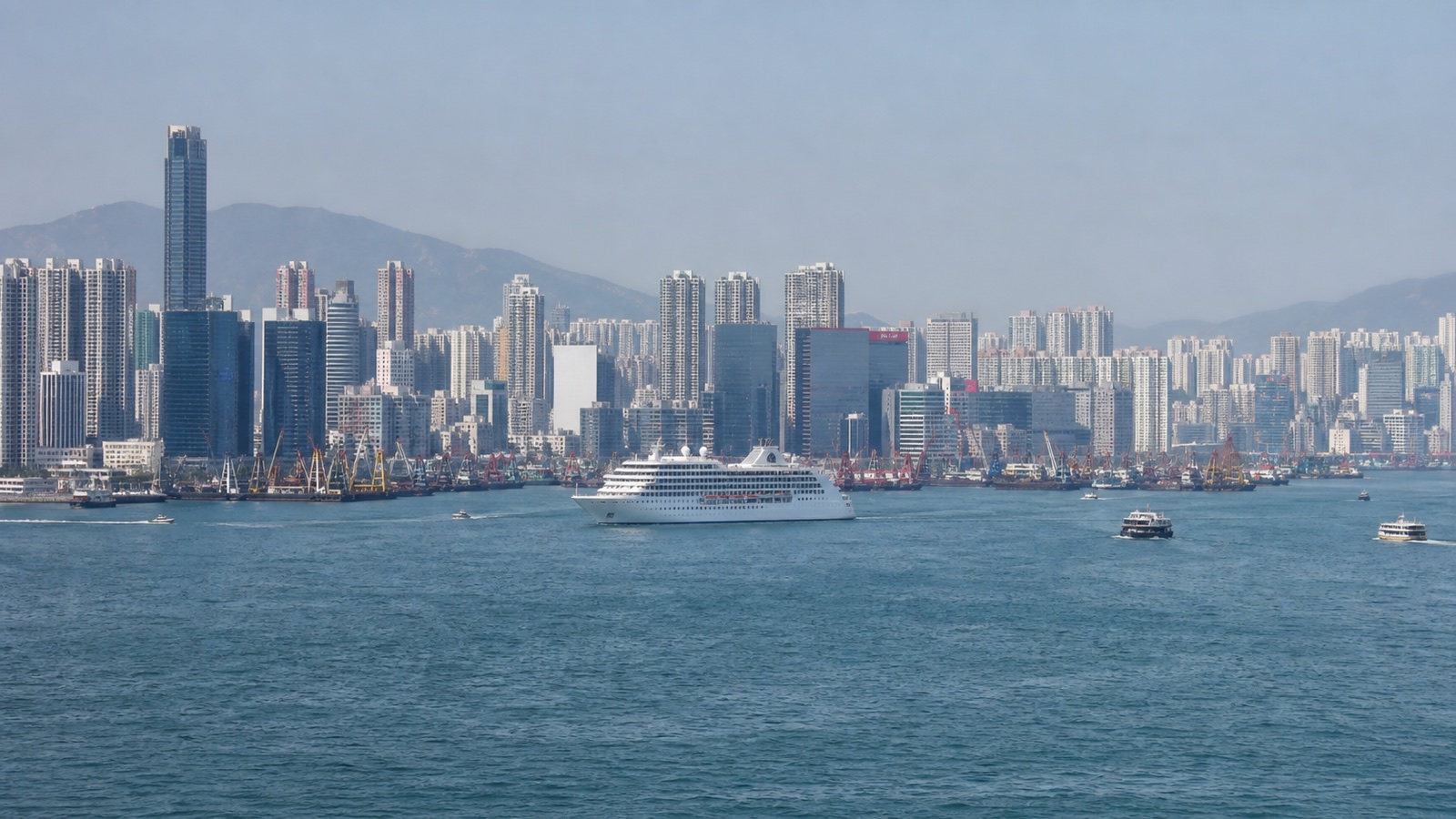
Choose one of five route families
Asia is not one itinerary. A Japan loop, a Singapore multi-country route and a Korea–Japan circuit create different climates, border events, gateways and shore-day friction. The right route family comes before the ship because the route decides how many countries, languages, currencies, terminals and long transfers the traveler must manage.
Japan
Seasonal scenery, major cities and regional ports across several Japanese islands.
- Typical length
- Often 7–14 nights
- Starts / ends
- Tokyo/Yokohama, Kobe or another Japanese gateway
- Best for
- Culture, food and one-country depth
- Main tradeoff
- Season and terminal detail matter
Southeast Asia
Singapore, Thailand, Vietnam, Malaysia and Indonesia in varied combinations.
- Typical length
- Often 7–16 nights
- Starts / ends
- Singapore, Hong Kong or a one-way combination
- Best for
- Country variety and warm-weather travel
- Main tradeoff
- Long city transfers and tropical conditions
China, Hong Kong & Taiwan
Large city ports paired with selected Japan or Korea calls.
- Typical length
- Often 5–14 nights
- Starts / ends
- Hong Kong, Shanghai, Tianjin or Keelung
- Best for
- Urban culture and regional food
- Main tradeoff
- Entry rules and deployment change
Korea & Japan
Port-intensive combinations across Korean and western or southern Japanese calls.
- Typical length
- Often 5–14 nights
- Starts / ends
- Japan, Busan or Incheon
- Best for
- Two-country contrast in one trip
- Main tradeoff
- Fast pace and immigration calls
Singapore departures
Short regional breaks and longer Thailand, Vietnam, Malaysia or Bali routes.
- Typical length
- Often 3–16 nights
- Starts / ends
- Singapore round trip or open jaw
- Best for
- First Southeast Asia cruise and city stay
- Main tradeoff
- Short and long routes solve different goals
Compare all five Asia itinerary families before choosing a cruise line or cabin.
If the first decision is climate and country depth, compare a Japan cruise with a Southeast Asia cruise directly.
Match the route to the trip you want
| Priority | Start with | Verify |
|---|---|---|
| One-country cultural depth | Japan | Regions, season and physical terminal |
| Several tropical countries | Southeast Asia | Long city transfers, heat and entry rules |
| Compact two-country contrast | Korea and Japan | Terminal, pace and immigration calls |
| Major East Asian cities | China, Hong Kong and Taiwan | Current deployment and country-specific documents |
| Simple long-haul gateway | Singapore departure | Exact terminal and route length |
First-time Asia cruisers usually benefit from fewer administrative moving parts. Japan gives country depth with several transit-friendly calls, while Singapore departures simplify the air gateway and allow a pre-cruise city stay. Broader Southeast Asia and East Asia routes can be excellent, but they need more tolerance for heat, traffic, entry-rule checks and long transfers from working ports.
Build the country and transit checklist early
Asia has no single cruise visa rule. List the passport used for booking, flight transit countries, embarkation country, every port country, any overnight stay and the disembarkation country. Then verify each traveler by nationality and residence status through current government and cruise-line sources.
This matters most on multi-country Southeast Asia and East Asia sailings. A traveler may need a visa, electronic arrival card, passport-validity rule or airline transit check even when another passenger on the same ship does not. Treat cruise-line document summaries as boarding guidance, not as a substitute for official entry sources.
Treat the departure gateway as part of the route
Singapore is the most straightforward common Southeast Asia gateway. Tokyo-area, Hong Kong, Shanghai, Tianjin, Keelung, Busan and Incheon departures each require their own airport, hotel, entry and terminal plan.
Yokohama and Tokyo Cruise Port Guide
Yokohama is a separate port city south of central Tokyo; confirm the exact pier, airport and hotel transfer.
Plan this gateway →Tokyo International Cruise Terminal Guide
Tokyo International Cruise Terminal is in the Tokyo waterfront area, but airport and city transport still require a complete plan.
Plan this gateway →Kobe Cruise Port Guide
Kobe has more than one cruise-terminal context; confirm the assigned facility before choosing city transport.
Plan this gateway →Hong Kong Cruise Port Guide
Hong Kong has more than one cruise context; confirm Kai Tak or the exact berth before choosing transport.
Plan this gateway →Shanghai Cruise Port Guide
Shanghai-area cruise facilities can be far apart; the terminal name determines the city-transfer plan.
Plan this gateway →Tianjin and Beijing Cruise Port Guide
Tianjin is the cruise port; central Beijing is a long inland journey requiring structured transport.
Plan this gateway →Keelung and Taipei Cruise Port Guide
Keelung is the physical port; Taipei requires onward rail or road travel.
Plan this gateway →Busan Cruise Port Guide
Busan uses call-specific cruise facilities; confirm the terminal before assuming walking or metro access.
Plan this gateway →Incheon and Seoul Cruise Port Guide
Incheon is the physical cruise port; central Seoul is a substantial road or rail journey.
Plan this gateway →Singapore Cruise Port Guide
Singapore passenger calls can use different terminal contexts; confirm the facility before hotel or airport planning.
Plan this gateway →Open the complete departure-port comparison.
Use the physical port—not only the destination label
Beijing from Tianjin, Seoul from Incheon, Bangkok from Laem Chabang, Ho Chi Minh City from Phu My, Hanoi from Ha Long and Kuala Lumpur from Port Klang are transfer-based days. The port name determines usable time.
Osaka Cruise Port Guide
Confirm the assigned Osaka berth before pairing a city day with Kyoto, Nara or another inland destination.
Read port guide →Nagasaki Cruise Port Guide
Nagasaki offers a compact historic city day with hills, tram travel and distinct peace-history and cultural sites.
Read port guide →Hiroshima Cruise Port Guide
Choose between central Hiroshima and Miyajima only after confirming the berth and complete transport chain.
Read port guide →Hakata and Fukuoka Cruise Port Guide
Hakata is the working port for Fukuoka; shuttle and city transport shape usable time.
Read port guide →Kagoshima Cruise Port Guide
Kagoshima combines city access with Sakurajima and regional touring; verify the cruise terminal before choosing transport.
Read port guide →Naha and Okinawa Cruise Port Guide
Naha is the urban gateway for an Okinawa call, while beaches and cultural sites add road time.
Read port guide →Shimizu and Mount Fuji Cruise Port Guide
Treat Mount Fuji visibility as weather-dependent and compare local Shimizu with longer inland routes.
Read port guide →Hakodate Cruise Port Guide
Hakodate offers a focused market, historic district and mountain-view day with berth-specific transport.
Read port guide →Otaru and Sapporo Cruise Port Guide
Otaru is the physical port; Sapporo requires a separate intercity plan in both directions.
Read port guide →Kanazawa Cruise Port Guide
Kanazawa is a culture-focused call where port transfer and timed sights determine the efficient order.
Read port guide →Jeju Cruise Port Guide
Confirm the exact Jeju terminal before choosing an island route; attractions are dispersed and road time matters.
Read port guide →Laem Chabang and Bangkok Cruise Port Guide
Bangkok is a long road journey from Laem Chabang; Pattaya and nearer plans create different timing risk.
Read port guide →Ko Samui Cruise Port Guide
Ko Samui calls commonly require tendering; pickup, island traffic and the final tender queue shape the day.
Read port guide →Phu My and Ho Chi Minh City Cruise Port Guide
Ho Chi Minh City is a long road trip from Phu My, while nearer coastal or local routes reduce traffic exposure.
Read port guide →Chan May, Da Nang and Hoi An Cruise Port Guide
Chan May is the port; Da Nang, Hoi An and Hue are different directions with distinct driving commitments.
Read port guide →Ha Long and Hanoi Cruise Port Guide
Ha Long supports a local bay day, while Hanoi requires a much longer inland transport plan.
Read port guide →Phuket Cruise Port Guide
Confirm berth or tender location before choosing beaches, old town or a boat excursion.
Read port guide →Penang Cruise Port Guide
George Town is the natural independent focus from Swettenham Pier, while island touring adds road time.
Read port guide →Port Klang and Kuala Lumpur Cruise Port Guide
Kuala Lumpur is an inland road or rail journey from Port Klang and traffic can dominate the return plan.
Read port guide →Benoa and Bali Cruise Port Guide
Benoa is the cruise gateway; Bali destinations are dispersed and traffic can change feasible touring range.
Read port guide →Compare climate by route, not continent
Japan and Korea have four-season tradeoffs. Southeast Asian coasts and islands have different heat, rain and monsoon patterns. Seasonal averages support route choice and packing; they do not forecast one sailing.
Compare Asia cruise seasons conservatively, then check current official forecasts and operator notices near departure.
Cherry blossom and autumn foliage timing in Japan can be valuable, but neither is guaranteed by the itinerary title. Southeast Asia requires more attention to monsoon patterns by coast, humidity, sudden rain and boat-day cancellation terms. Taiwan, Hong Kong, Japan, Korea and parts of China can also face typhoon or tropical-storm disruption in warmer-season planning windows.
Plan shore days around distance, language and payment
Independent touring works best where the port is central, transit is clear and the group can manage the return without stress. Structured transport becomes more useful when the day involves Beijing from Tianjin, Bangkok from Laem Chabang, Ho Chi Minh City from Phu My, Hanoi from Ha Long or Kuala Lumpur from Port Klang.
Language and payment assumptions change by port. Before relying on local taxis, trains or apps, confirm how you will pay, what address to show, where pickup happens and what fallback works if traffic, rain or a missed connection changes the plan. Overnight or late-stay calls can expand the day, but they still need a clear return chain.
Budget the complete trip
Compare current fare terms, long-haul flights, a gateway hotel, terminal transport, onboard choices, port days and contingency. Distant-city calls can be a meaningful part of the trip total.
Use the Asia cruise cost framework without freezing a temporary price into this guide.
Use the decision guides in order
- Choose the route family.
- Choose the route-specific season.
- Build the gateway and terminal plan.
- Compare only ships serving the right route.
- Plan shore days by access and return risk.
- Pack for the actual climate mix.
- Verify every country and transit point.
Static guidance, current search elsewhere
CruiseGuide explains durable route, gateway and port decisions. It does not mirror sailing dates, prices or cabin inventory. A verified provider-neutral handoff may lead to current search without changing the editorial order.
Check current Asia cruise options
Use a current cruise search only after choosing the route family, gateway and date window that fit this guide.
Compare before you leave the guide
- Match the option to your port day or sailing plan.
- Use provider pages for current details.
- Keep cruise line and port rules ahead of booking links.
Asia cruise booking search via CruiseDirect
Best for: Travelers ready to compare current Asia sailings, fares and cabin choices through CruiseDirect.
- Cruise search
- CruiseDirect Main/Home Page
- Gateway context
- Singapore
- Booking check
- Verify live fare, taxes, fees, cabin category and cancellation terms on CruiseDirect before deposit.
- Trip fit
- CruiseGuide links to a CruiseDirect CruiseDirect Main/Home Page landing page. Verify the exact sailing, taxes, fees, cabin category, cancellation terms and final supplier conditions before deposit.
Affiliate disclosure: CruiseGuide may earn a commission if you book through these CruiseDirect links, at no additional cost to you. CruiseDirect links are OTA booking handoffs selected for route fit, not direct cruise-line official-site affiliate links.
Cruise fares, taxes, cabin categories and promotional terms change. Confirm every detail on CruiseDirect before paying a deposit.
Official sources
- Japan Tourism Agency — cruise ports — Official Japan port directory and current port context
- Singapore Tourism Board — cruise — Official Singapore cruise-sector and gateway context
- Princess Cruises — Japan and Asia — Official operator route examples; exact sailings vary
- Norwegian Cruise Line — Southeast Asia — Official operator regional overview and current-search handoff