Our first step onto Alaska soil led almost immediately back onto the water—and to the wildlife encounter I would be least willing to miss.
A quiet port before the first sighting
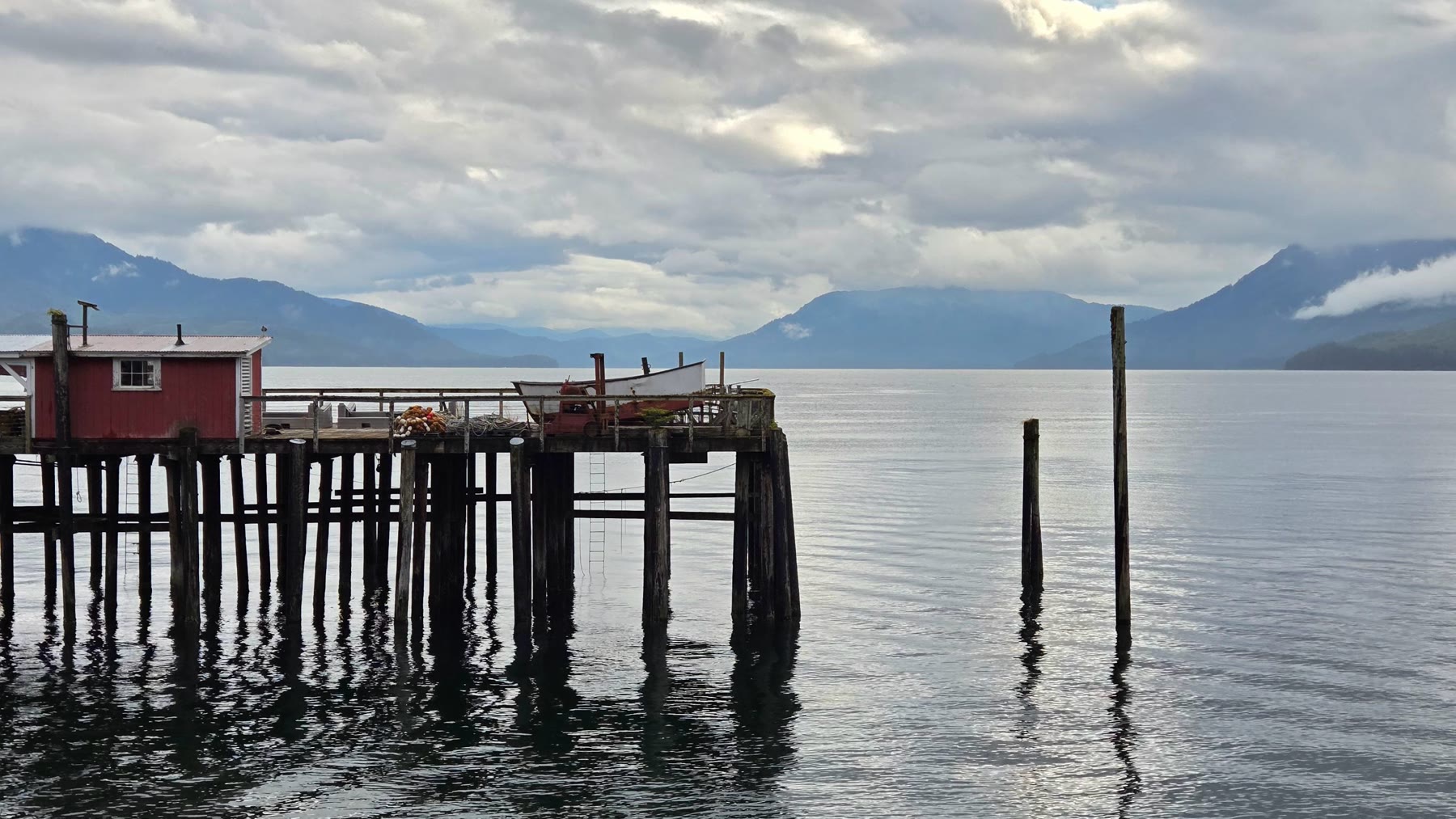
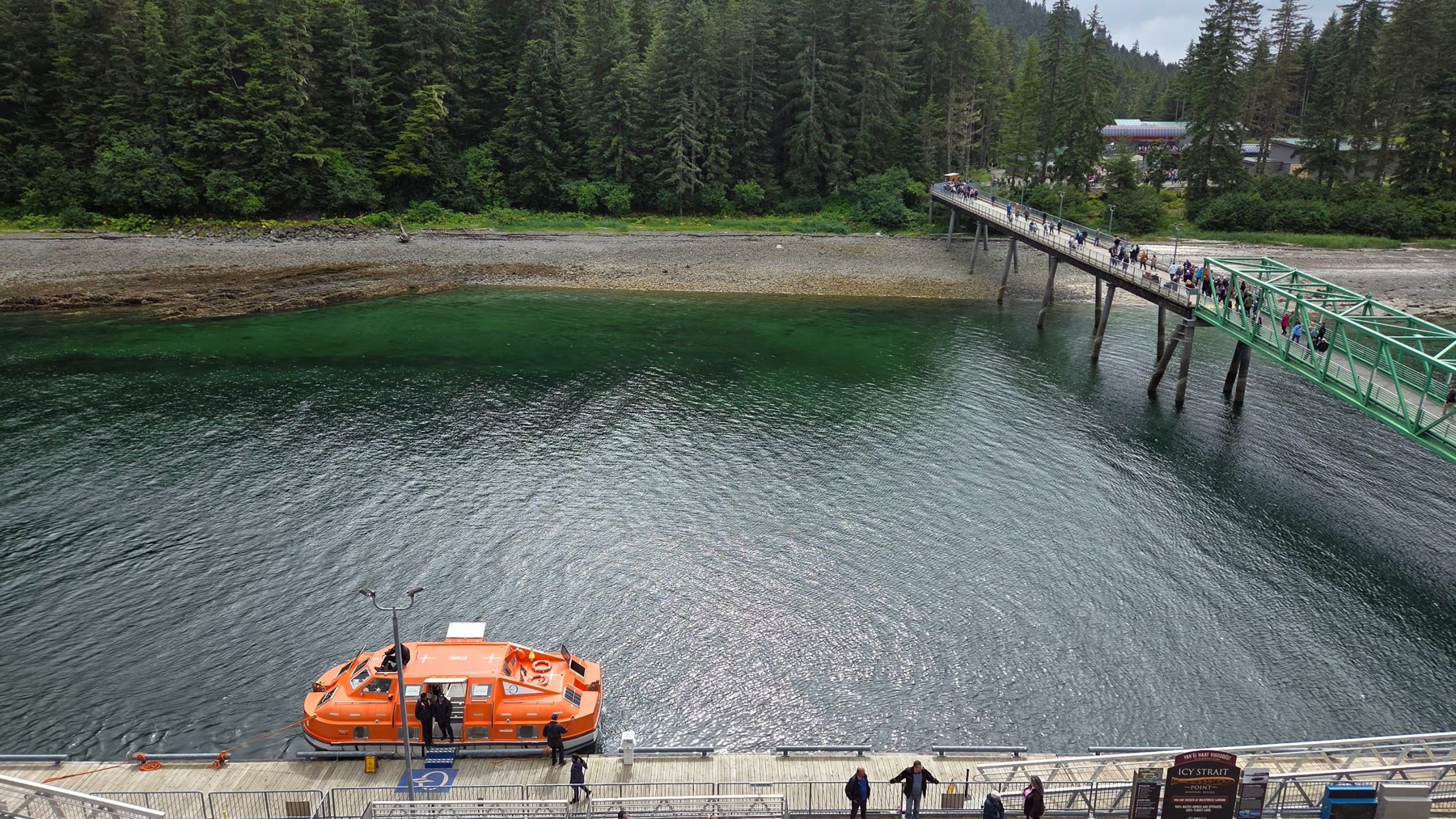
Icy Strait Point was our first place to disembark, on the third day of the voyage. The port did not announce itself with a large downtown. Forest pressed close to the shoreline; an old wooden pier stood over still water; low cloud softened the mountains. Even before the boat left, the setting had changed the rhythm of the trip.
We had come specifically to look for whales. That choice carried uncertainty. Wildlife does not follow a theatre schedule, and no responsible account should turn one fortunate outing into a guarantee. We could only go out, watch carefully and accept whatever the water offered.
Then the water came alive
We were exceptionally lucky. We saw a group of orcas moving through the grey water, several humpback whales, and also sea lions and seals. The sightings did not arrive as one neat sequence. They required scanning the horizon, listening for a breath and learning to recognize a small disturbance that might become a fin, a back or a plume of spray.
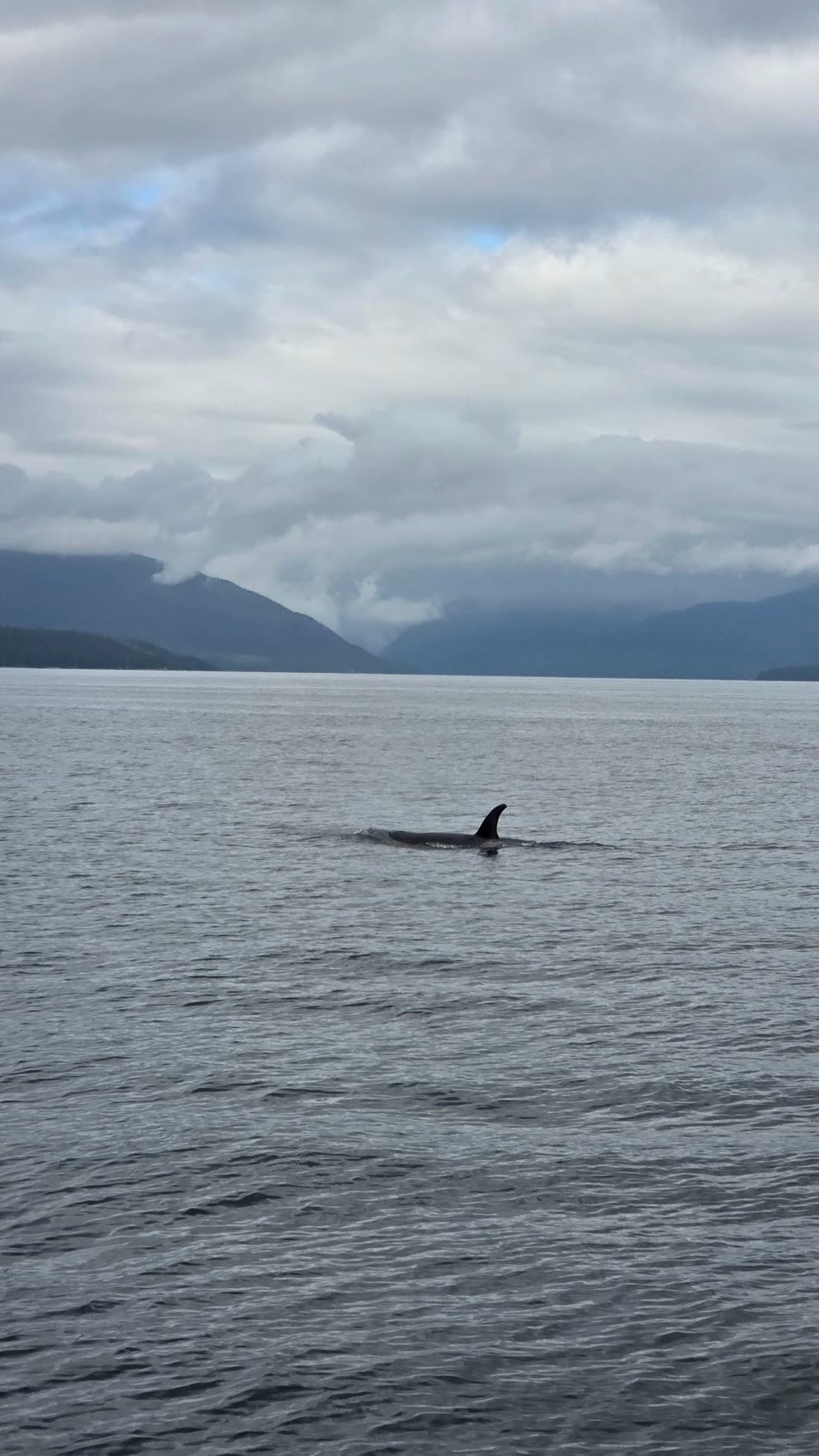
The photograph I brought home is modest compared with the experience. An orca’s dark fin breaks the surface beneath layered cloud and mountains. It does not show the family’s reaction beside me, or the shared silence that sometimes followed an appearance. A camera can prove that we were there; it cannot reproduce the attention of waiting together.
Twenty-four seconds from the water
The short clip below keeps its original field sound. I have not labeled the animal in this particular sequence because the footage alone does not support a confident species identification. What it preserves is the pace of the encounter: open water, a dark back, a breath, and then absence again.
The most memorable wildlife encounters are not performances arranged for us. Their value comes partly from the fact that the animal may never appear—and that, when it does, everyone aboard understands they have been admitted briefly into another life.
What I would tell another family
If wildlife is important to you, Icy Strait Point deserves serious consideration. For our family it was not merely “an excursion”; it became one of the emotional anchors of the entire voyage. But choose it with honest expectations. Dress for wind and spray, keep your hands free enough to hold on, and do not let the camera occupy every second of the encounter.
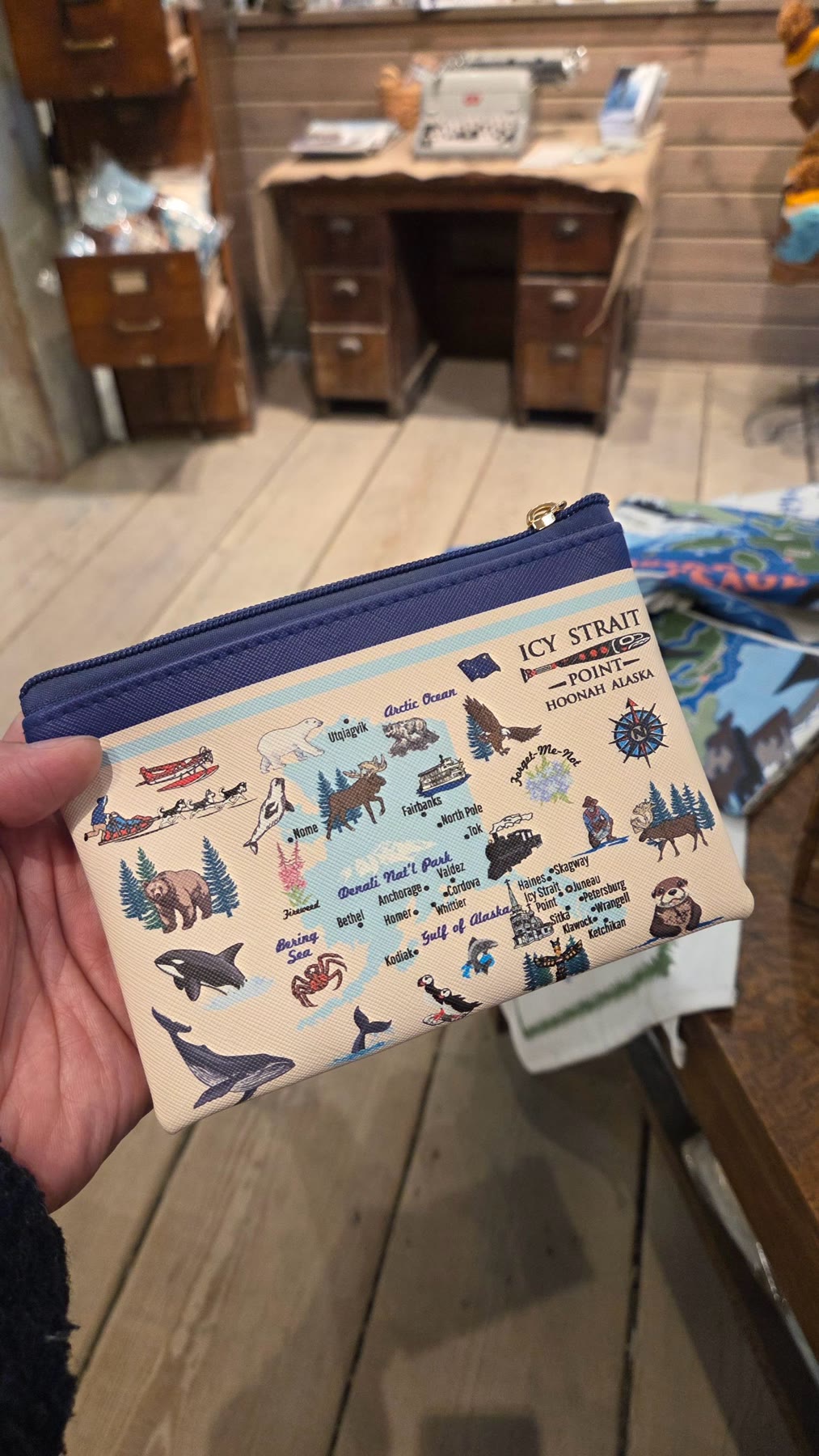
I would also leave room after the boat trip. Walking back through the port and briefly browsing a souvenir shop gave everyone time to settle after the intensity offshore. The small Alaska pouch in the photograph is ordinary, but it now recalls a day when the living symbols printed on it had just been present beyond the window.
For planning rather than personal reflection, use the separate Plan an Icy Strait Point whale-watching day. It compares tour formats and port timing without pretending that our sightings will be repeated.